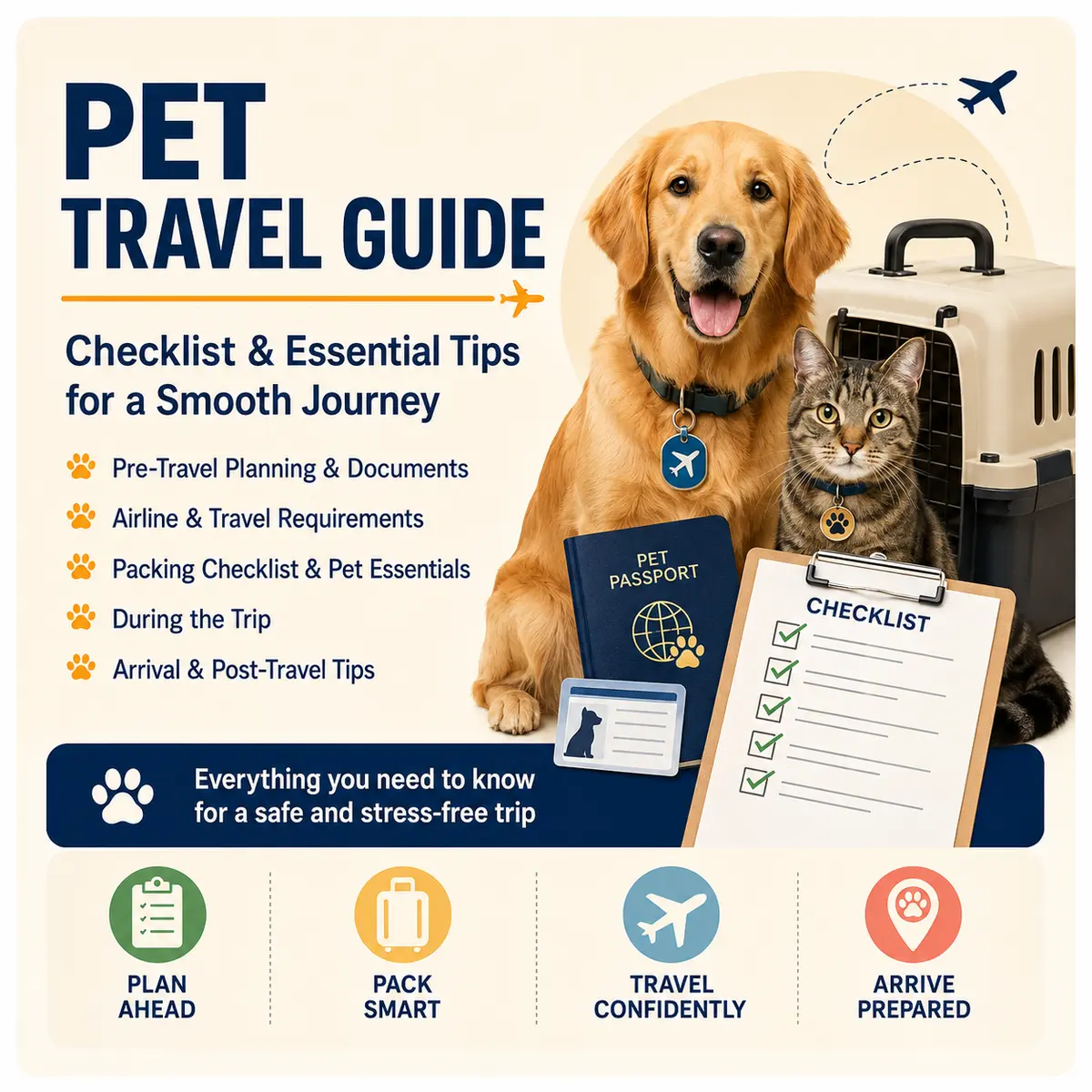
Check Your Pet’s Flight Denial Risk Before the Airport

Flying internationally with a dog or cat? One missing form, wrong crate, expired certificate, microchip issue, CDC pathway mistake, or airline rule can delay your trip or get your pet denied.

Pet Flight Help helps you review the major risk points before travel: your route, airline, travel date, pet age, CDC dog import pathway, health certificate timing, rabies proof, microchip status, and crate/carrier fit.We do not replace your airline, veterinarian, CDC, USDA, customs, or destination-country authority. We help you know what to verify before the mistake becomes expensive.

For dogs and cats flying internationally. Educational readiness audit only. Final approval rests with official authorities.

Can a Dog or Cat Be Denied Boarding for Pet Travel Issues?

Yes. A pet can be denied or delayed if the airline, destination country, CDC rules, health certificate timing, rabies proof, microchip, crate/carrier, or import documents do not match the trip. The biggest mistake travelers make is assuming one pet travel rule applies everywhere. Your route, airline, travel date, pet type, and country history all matter.

One Small Pet Travel Mistake Can Become Expensive Fast

Most travelers do not find the problem while planning. They find it when the airline asks for proof, the vet says the certificate timing is wrong, the crate is rejected, or the CDC pathway is more complicated than expected.

Your pet may be at risk if:* You do not know which CDC dog import pathway applies.* Your dog is entering or returning to the U.S. without a CDC Dog Import Form receipt.* Your dog is under 6 months old and entering the U.S.* Your dog does not have a detectable microchip.* Your dog has been in a CDC high-risk rabies country within the last 6 months.* Your dog was vaccinated outside the U.S. and may need additional checks.* Your health certificate timing is unclear.* Your airline has not approved pet travel on your route.* Your crate or carrier may be too small.* Your pet is a snub-nosed breed traveling cargo, checked baggage, or in hot weather.* You are relying on generic advice instead of route-specific verification.

Pet Travel Denial-Risk Checker

Answer these questions to see whether your dog or cat travel plan looks low, medium, or high risk before you fly.

Want us to review your details? Submit them below.

How We Classify Pet Travel Risk

Low Risk:
Your trip may be lower risk when your pet meets the basic route requirements, your airline accepts pets on the selected route, your forms are started early, your health certificate timing is clear, your crate/carrier appears appropriate, and no high-risk pathway is triggered.
Medium Risk:
Your trip may be medium risk if one or more details are unclear, such as airline approval, crate size, health certificate timing, CDC form status, rabies proof, microchip information, or country-entry rules. Medium risk means you should verify quickly before booking, paying pet fees, or arriving at the airport.
High Risk:
Your trip may be high risk if your dog is entering the U.S. without a CDC Dog Import Form receipt, is under 6 months old, has no microchip, has been in a CDC high-risk rabies country within the past 6 months, has unclear rabies documentation, is foreign-vaccinated from a high-risk country, has no health certificate plan close to travel, or may have a crate/carrier issue.

Flying a Dog Into the U.S.? The CDC Pathway Matters

U.S. dog import rules changed significantly in 2024. All dogs entering or returning to the United States must have a CDC Dog Import Form receipt. Dogs must also meet basic requirements such as appearing healthy, being at least 6 months old, and having a microchip. The pathway changes depending on whether your dog has been in a high-risk rabies country within the last 6 months and whether the dog was vaccinated in the U.S. or abroad.

Low-Risk or Rabies-Free Country Pathway

Dogs coming only from dog rabies-free or low-risk countries usually follow a simpler CDC path. The CDC Dog Import Form receipt may be the only CDC form needed for that pathway, but the dog must still meet the basic entry requirements and the traveler should verify airline and destination rules before flying.

U.S.-Vaccinated vs Foreign-Vaccinated Dogs

The CDC pathway can change depending on where the dog’s rabies vaccine was given. A U.S.-vaccinated dog returning from a high-risk country does not follow the same document path as a foreign-vaccinated dog from a high-risk country.

Flying From Liberia, Nigeria, Ghana, Kenya, India, or Another High-Risk Country?

If your dog has been in a CDC high-risk rabies country within the last 6 months before entering the U.S., do not rely on generic pet travel advice. You may need to verify the CDC Dog Import Form receipt, rabies vaccination pathway, microchip, age, port of entry, foreign-vaccinated vs U.S.-vaccinated status, and any additional CDC requirements before travel.

High-risk country travel is not just a “bring the vaccine card” situation. The pathway matters.

Your Pet’s Crate Can Get Rejected Even If the Paperwork Looks Fine

For cargo or checked-baggage pet travel, crate size is one of the biggest practical risks. IATA says each animal in a travel container must have enough room to stand, sit erect, lie naturally, and turn normally while standing. If your pet’s head or ears touch the top, or your dog cannot turn comfortably, the crate may be a problem.

Snub-Nosed Breed Warning

Snub-nosed dogs and cats can face extra travel risk, especially in cargo or hot weather. Airlines may restrict certain breeds or routes. If your pet is a bulldog, pug, French bulldog, boxer, Persian cat, or another snub-nosed breed, verify airline rules early.

Do Not Wait Until the Last Minute for the Health Certificate

Pet travel paperwork often depends on timing. Some documents must be completed within a specific window before travel, while vaccines, tests, treatments, or endorsements may need to happen earlier. If your flight is close and your health certificate has not been started, your risk goes up.

The safest move is to verify requirements before booking, before paying airline pet fees, and before your travel date gets too close.

Pet Travel Readiness Audit & Verification Guide

Starting at $39

For travelers who want more than a generic checklist.

Send us your route, airline, travel date, pet details, CDC form status, vaccine/microchip information, health certificate status, travel method, and crate/carrier photos. We will review the information you provide and send back a simple red/yellow/green readiness guide with the main risks to verify before travel.

What We Review:* Departure and destination country
* Dog or cat travel risk
* CDC Dog Import Form status
* Low-risk vs high-risk CDC pathway
* U.S.-vaccinated vs foreign-vaccinated dog pathway
* Microchip status
* Rabies vaccine timing concerns
* Health certificate timing concerns
* Airline pet policy conflict risk
* In-cabin, checked baggage, or cargo risk
* Crate/carrier photo review
* Snub-nosed breed warning
* Final verification checklist

What You Receive:* Red/yellow/green risk summary
* Route-specific verification checklist
* Document timing warning points
* Airline and crate questions to ask before travel
* CDC/U.S. entry risk notes if applicable
* Clear next steps to confirm with official authorities

Important: This Is an Audit, Not a Travel Approval

Pet Flight Help provides a readiness audit and verification guide based on the route, airline, pet details, documents, and photos you submit. We do not guarantee airline boarding, cargo acceptance, customs clearance, CDC approval, USDA endorsement, veterinary certification, destination-country entry, or quarantine avoidance. Final decisions are made by the airline, veterinarian, CDC, USDA, customs, border officials, and destination-country authorities.

Download the Free Pet Travel Denial-Risk Checklist

Before you fly, use this checklist to review the most common document, airline, CDC, crate, microchip, rabies, and health certificate issues that can cause last-minute panic.

Checklist Includes:* Dog and cat document questions
* CDC Dog Import Form reminder
* Microchip check
* Rabies proof check
* Health certificate timing check
* Airline approval check
* Crate/carrier check
* High-risk country warning
* Final “verify before flight” list

Pet Travel Denial-Risk Guides

Practical answers for the questions pet owners are actually panicking about.

Most pet travel advice is too generic. Our guides focus on the real risks: denied boarding, CDC dog import rules, high-risk rabies countries, crate size, health certificate timing, airline conflicts, and route-specific mistakes.

CDC Dog Import Pathway

* Do All Dogs Entering the U.S. Need the CDC Dog Import Form?
* CDC Dog Import Form: What Changed After August 1, 2024?
* Low-Risk vs High-Risk Country: Which CDC Dog Import Pathway Applies?
* Can a Dog Under 6 Months Enter the U.S.?
* Does My Dog Need a Microchip to Enter the U.S.?
* U.S.-Vaccinated vs Foreign-Vaccinated Dogs: Why It Matters

High-Risk Country Guides

* Flying a Dog From Liberia to the U.S.
* Flying a Dog From Nigeria to the U.S.
* Flying a Dog From Ghana to the U.S.
* Flying a Dog From Kenya to the U.S.
* Flying a Dog From India to the U.S.
* Foreign-Vaccinated Dog From a High-Risk Country: What Can Go Wrong?

Denied Boarding & Airport Panic

* Can My Dog Be Denied Boarding for Missing Pet Documents?
* Can My Cat Be Denied Boarding on an International Flight?
* What Happens If My Pet’s Paperwork Is Wrong at the Airport?
* Can I Fix Pet Travel Documents Close to My Flight?
* Airline Pet Policy vs Country Entry Rules: Which One Matters?

Health Certificate Timing

* How Many Days Before Travel Do I Need a Pet Health Certificate?
* What If My Pet Health Certificate Is Too Old?
* What Is a USDA-Endorsed Pet Health Certificate?
* Do Cats Need Health Certificates for International Travel?
* What to Ask Your Vet Before International Pet Travel

Crate, Carrier & Airline Rules

* Will My Pet Carrier Be Accepted by the Airline?
* What Size Travel Crate Does My Dog Need?
* Can Two Pets Fly in One Crate?
* Why Airlines Reject Pet Crates at Check-In?
* Snub-Nosed Dogs and Air Travel: What to Verify Early

Europe, UK & Canada Routes

* Flying a Dog or Cat to Europe From Outside the EU
* What Is an EU Animal Health Certificate?
* Flying a Dog From the U.S. to the UK
* Flying a Cat From the U.S. to Canada
* Flying a Dog From Canada to the U.S. After the CDC Rule Change

Why Pet Flight Help Exists

Pet travel is stressful because the rules are scattered across airlines, veterinarians, CDC pages, USDA guidance, destination-country rules, and crate requirements. A traveler can read five pages and still not know what applies to their exact route.Pet Flight Help was built to make the first step clearer. We help pet owners organize the major risks before travel: route, airline, CDC pathway, health certificate timing, rabies, microchip, crate/carrier, and final verification questions.We are not here to replace official authorities. We are here to help you stop guessing before the mistake becomes expensive.

Frequently Asked Questions

FAQ 1: Do all dogs entering the U.S. need a CDC Dog Import Form?
Yes. Dogs entering or returning to the United States must have a CDC Dog Import Form receipt. The pathway then changes depending on whether the dog has been in a high-risk rabies country within the last 6 months and where the dog was vaccinated.
FAQ 2: Can a dog under 6 months enter the U.S.?
This is high risk. CDC rules require dogs entering the U.S. to be at least 6 months old. If your dog is under 6 months old, do not assume the airline can make an exception.
FAQ 3: Does my dog need a microchip to enter the U.S.?
Yes. Dogs entering the U.S. must meet microchip requirements. If the chip is missing, unreadable, non-compliant, or not connected properly to the dog’s records, your trip may be at risk.
FAQ 4: What if my dog is coming from Liberia, Nigeria, Ghana, Kenya, or India?
These routes may trigger the CDC high-risk country pathway if the dog has been in a high-risk rabies country within the last 6 months. That can mean more documentation and verification than a low-risk country route.
FAQ 5: What is the difference between a low-risk and high-risk CDC pathway?
A low-risk or rabies-free country route may require fewer documents, while a high-risk country route can require additional rabies, vaccination, microchip, and pathway-specific checks.
FAQ 6: Why does U.S.-vaccinated vs foreign-vaccinated matter?
For dogs that have been in high-risk countries, the CDC document path can change based on whether the dog was vaccinated in the United States or outside the United States.
FAQ 7: Can my pet be denied because of the crate?
Yes. Even if the paperwork looks fine, a crate or carrier can cause problems if it does not meet airline or live-animal transport expectations. The pet should have enough room to stand, sit, turn normally, and lie naturally.
FAQ 8: Are snub-nosed breeds higher risk for flying?
Yes. Snub-nosed breeds such as bulldogs, pugs, French bulldogs, boxers, and Persian cats may face added airline restrictions or health risks, especially in cargo or hot weather.
FAQ 9: Can you guarantee my pet will be allowed to fly?
No. We provide a readiness audit and verification guide. Final decisions are made by the airline, veterinarian, CDC, USDA, customs, border officials, and destination-country authorities.
FAQ 10: Is Pet Flight Help a relocation company?
No. Pet Flight Help is not a pet relocation company, airline, veterinarian, customs broker, USDA office, or CDC office. We help travelers identify what to verify before travel.
FAQ 11: What should I submit for a Pet Travel Readiness Audit?
Submit your departure country, destination country, airline, travel date, pet type, breed, age, microchip status, rabies vaccine details, health certificate status, CDC form status if entering the U.S., travel method, and crate/carrier photos.
FAQ 12: When should I check my pet travel documents?
As early as possible. Pet travel requirements can involve vaccine timing, vet appointments, health certificates, endorsements, airline approval, CDC forms, and route-specific rules.

Do Not Wait Until the Check-In Counter to Find the Problem

If your pet is flying internationally, check the denial risks early. A short review now can help you spot the questions to verify before the flight gets too close.

Disclaimer

Pet Flight Help provides educational pet travel readiness information, risk-checking tools, and verification guides. We do not provide veterinary services, legal advice, customs brokerage, government approvals, airline approvals, USDA endorsement, CDC approval, or destination-country entry approval. Always confirm final requirements with your airline, veterinarian, CDC, USDA/APHIS, customs, and destination-country authorities before travel.

Official source links

CDC confirms the form is required for each dog being brought into the U.S., and the form page sends users to this official survey link.

CDC’s list includes countries considered high risk for dog rabies and says dogs that have been in those countries within the past 6 months must meet additional requirements.

© 2026 PetFlightHelp.com — Check Your Dog or Cat’s Travel Risk Before You Fly